Everything You Want to Know About Restaurant CRM Software
Clear answers about customer profiles, order history, loyalty management, segmentation, and personalized follow-ups.
These answers explain how Kappino helps restaurants centralize customer data, recognize returning customers, improve service, and increase repeat visits through one connected CRM system.
A restaurant CRM solution is customer relationship management software designed for restaurants, cafés, bars, food chains, and hospitality groups. It keeps customer profiles, contact details, preferences, order history, spend, loyalty activity and follow-up campaigns in one place.
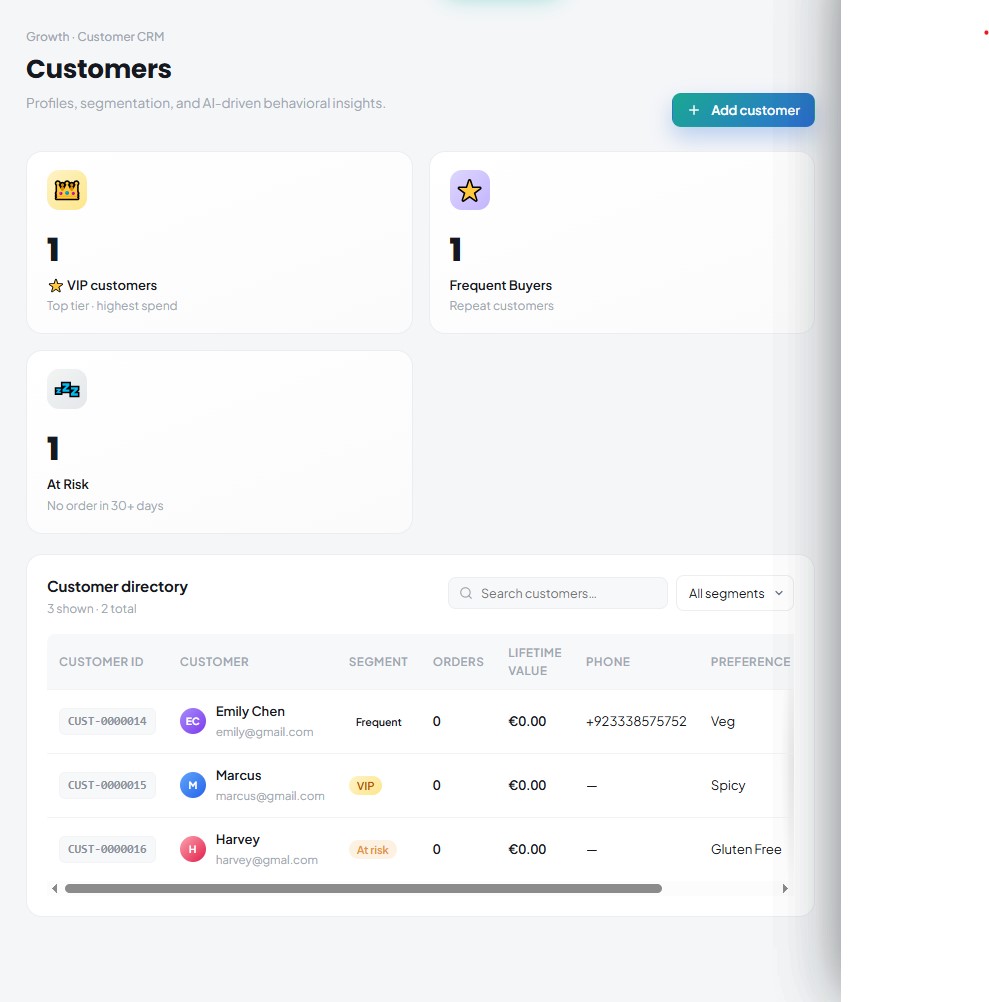
Kappino creates a profile for every customer with their contact details, address, segment, loyalty tier and points, free-text preferences and internal staff notes. Order counts and lifetime value are added automatically from the orders you take, giving your team one clear view of each customer.
Yes. Customers entered at the POS are captured automatically as guests, and you can convert a guest into a regular customer at any time. Their orders, spend and loyalty points then build up on one profile.
Restaurant CRM software helps increase repeat visits by identifying regular customers, VIPs, inactive customers and high-value guests. With this data, restaurants can send more relevant email campaigns, reward loyal members and build stronger customer relationships.
Yes. You can tag customers as VIP, Frequent, New or At-risk and filter by segment or loyalty tier. Email campaigns can target ready-made audiences such as VIP, frequent, new, at-risk (no order in 30+ days), high spenders and Gold or Platinum members.
Yes. Kappino supports multi-branch restaurant groups. You can switch between branches or view them all, and customers earn loyalty points on every channel — POS, QR menu, website and delivery orders.
POS software mainly records sales and orders, while reservation software manages bookings and tables. A restaurant CRM focuses on the customer relationship: who the customer is, how often they order, how much they spend, and what follow-up can bring them back.